Categories
Ideas & Insights Publications Transfer Pricing

Tax Rules on Intra Group Loans

Publications – Transfer Pricing

The Malaysia Transfer Pricing Guidelines on Controlled Financial Transactions released on 30 July 2026, serve as a supplement to Chapter 9 of the Malaysia Transfer Pricing Guidelines and establish detailed rules on pricing, economic substance, and documentation for related-party financing.

Introduction

The Inland Revenue Board of Malaysia (“IRB”) had published the Malaysia Transfer Pricing Guidelines on Controlled Financial Transactions: Intra-Group Loans (“MFTIL Guidelines”) on 30 July 2026. These Guidelines serve as a comprehensive guide to determine the arm’s length nature of the intra-group loans and serves as an essential supplement to the broader Malaysia Transfer Pricing Guidelines 2024.

Under the new MFTIL Guidelines, setting an arm’s-length interest rate for related-party financing requires a four-step framework: accurately characterizing the transaction, evaluating functional profiles, assigning risks, and executing a formal market benchmarking analysis. These core strategies, form the foundation of the guideline’s four structural chapters.

Chapter 1: The Ultimate Reality Check (Debt vs. Equity)

The IRB closely scrutinizes intra-group financing to detect hidden equity structured as corporate debt. If a transaction is found to lack the commercial and economic substance of a genuine loan, the Director General can recharacterise it as equity, disallow your corporate interest deductions, and impose statutory surcharges.
Criteria Debt Equity
a. Existence of a legal obligation to repay Fixed and enforceable obligation to repay principal and interest No obligation to repay; repayment depends on profits or discretion of the management
b. Fixed maturity date Repayment scheduled on a specific date or upon demand No fixed maturity, redeemable at issuer's discretion
c. Expectation of return Interest is predetermined Return depends on profits/ dividends
d. Ranking upon liquidation or dissolution Ranks as a creditor (before equity holders) Ranks as equity (after debt obligations)
e. Participation in management or control No participation in the borrower's management Usually includes voting rights or influence in management
f. Right to enforce repayment Enforceable in courts as a debt contract Legal recourse is limited; depends on the residual claim
g. Treatment in accounting and financial reports Liability Equity
h. Tax treatment under the relevant tax laws Treated as interest-bearing loan Treated as capital contribution or equity
i. Intent of the parties Debtor-creditor relationship Ownership interest

Chapter 2: The Double Lens Principle

Taxpayers are prohibited from setting interest rates for related-party loans without proper economic justification. To comply with transfer pricing rules, the interest rate must reflect market realities by considering the commercial positions of both the lender and the borrower.
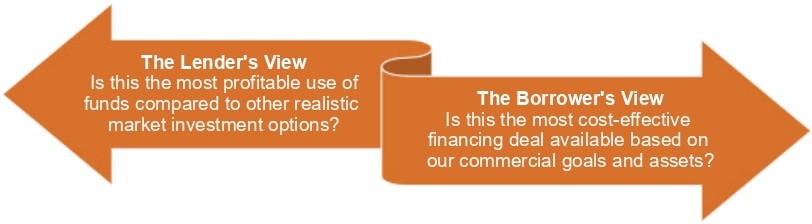
The golden rule here is creditworthiness. Multinational groups must formally evaluate and retain credit reports from recognized agencies like RAM Ratings, Moody’s, or Standard & Poor’s (S&P). For local Malaysian Small & Medium Enterprises (SMEs), using reporting systems like CTOS and CCRIS is acceptable to justify commercial risk profiles.

The MFTIL Guidelines state that membership in a Multinational Enterprise (“MNE”) group affects a subsidiary’s borrowing conditions in two distinct ways:

1) Group Policy Influence: The overarching financial policies of the MNE group often shape the specific loan types, terms, and pricing available to the entity from independent lenders.

2) Implicit Group Support: Lenders may offer lower borrowing costs and higher credit ratings based on the passive expectation that the MNE parent will assist during financial distress. This type of passive economic benefit is called “implicit support”. Because it arises automatically from being part of the group, it does not require any intercompany service fees or transfer pricing adjustments.

Chapter 3: Arm’s Length Compliance

A comparability analysis can assist to determine the appropriate pricing approach for establishing the arm’s length interest rates. Taxpayers must select the most suitable pricing approach to calculate and justify their cross-border or domestic intra-group interest rates.
Pricing approach Description
Comparable Uncontrolled Price Method ("CUP Method")
  • Consider the borrower's credit rating, the specific issuance, all applicable terms and conditions, and other comparability factors.
  • Benchmark rate against the following:
    • Publicly available data for other borrowers with the same credit rating and terms.
    • Realistic alternative financial transactions that share comparable economic characteristics. For example, bond issuances, third-party loans, deposits, convertible debentures or commercial papers.
    • Potential internal CUP, such as other independent loans received or granted by the taxpayer or its related group entities.
  • If an external CUP is performed, appropriate adjustments may be required to enhance comparability.
Cost of Funds Method
  • In absence of a CUP, this method may be employed.
  • The cost of funds represents the borrowing expenses that the lender incurs in acquiring the necessary capital for lending, such as:
    • Borrowing Costs - the actual interest or expenses paid to secure the capital.
    • Operational Expenses - costs for arranging, managing, and servicing the loan.
    • Risk Premium - extra charge reflecting the specific economic risks of the loan.
    • Profit Margin - an appropriate return that includes the incremental cost of equity needed to back the financing.
  • This method may be appropriate for pricing loans in circumstances where capital is sourced externally and subsequently passes through one or more associated intermediary entities before reaching the ultimate borrower.
  • If a lender acts only as an agent or intermediary, its arm's-length return should be limited. Instead of earning a full financing margin, it should only recover the specific costs and risks of providing that intermediary service.
  • Lenders must separate external borrowings from internal capital (like retained earnings) when calculating the cost of funds.
    • External Funds are evaluated using the actual, visible borrowing interest rates paid to third parties.
    • Internal Funds are evaluated using an opportunity cost, such as the interest income lost by not placing the cash into a fixed deposit.
  • The MFTIL Guidelines does highlight that if cost of funds higher than prevailing market averages is applied, the taxpayer is required to carry out a comprehensive comparability analysis to demonstrate that the rate aligns with the arm's length principle.
Simplified Approach
  • Taxpayers who are exempted from preparing the CTPD or eligible to prepare a minimum CTPD can opt for this method. However, this method cannot be used for back-to-back loan arrangements. It does not apply if a company borrows capital from one related entity and simply passes it through to the final borrower.
  • This method designates two rates, both which are publicly available on Bank Negara Malaysia's ("BNM") official website with its own set of eligibility factors: Deposit rate The average fixed deposit rate of commercial banks published by the BNM at the end of the calendar month or such other reference lending rate prescribed by the DGIR.

    Taxpayer must fulfil the following eligibility criteria:
    • Not in the business of borrowing and lending;
    • Interest income of the intra-group loan is taxed;
    • Loan is from internal funds;
    • Loan is denominated in Malaysian Ringgit ("MYR");
    • The related party is a resident in Malaysia; and
    • Loan does not exceed MYR 50 million in the financial year.

    Average Lending Rate ("ALR") The ALR of commercial banks published by the BNM at the end of the calendar month or such other reference lending rate prescribed by the DGIR.

    Taxpayer must fulfil the following eligibility criteria:
    • Not in the business of borrowing and lending;
    • Interest income of the intra-group loan is taxed;
    • Loan is denominated in MYR; and
    • Loan does not exceed MYR 50 million in the financial year.
According to the MFTIL Guidelines, taxpayers are permitted to review the arm’s length interest rates established through the most appropriate pricing method, other than the simplified method, once every three (3) years in order to minimise compliance costs, provided that all facts and circumstances remain unchanged.

Chapter 4: Compliance Action Plan

The MFTIL Guidelines mentions that the taxpayer engaged in intra-group loans is required to maintain relevant documentation as follows:

  • Agreements
  • Credit assessments
  • Supporting evidence demonstrating compliance
  • Terms of the intra-group loans
  • Interest charged

Conclusion

With the introduction of the MFTIL Guidelines, the IRB is setting an expectation on the taxpayer to study if the intra-group loan that they receive or provide is consistent with the arm’s length principle. Therefore, taxpayers with existing intra-group loans should focus on:

1. Reviewing the existing intra-group loan, if it has debt or equity characteristics.
2. Assessing the creditworthiness of the related party borrower and document the assessment.
3. Evaluating the most appropriate method to establish the arm’s length interest rates.
4. Studying the current documentation in relation to the intra-group loans, to determine if they meet the compliance requirements.
Categories
Featured Ideas & Insights Publications Transfer Pricing

Improving Transfer Pricing Compliance

Improving Transfer Pricing Compliance

The Transfer Pricing Rules 2023 supersedes the rules that were released in 2012. Significant changes were made with the intention to boost compliance and provide taxpayers with more clarity with regards to Transfer Pricing compliance.

Transfer Pricing Guidelines (“TPG”)

The 2012 Transfer Pricing Guideline was intended to provide detailed guidance to taxpayers on how to comply with the requirements of the law under Section140A of Income Tax Act 1967 and the TP Rules 2012. The 2012 TPG is applicable to:

  • Controlled transactions between associated persons, where at least one party is assessable or chargeable to tax in Malaysia; and
  • Applies to both cross-border transactions and domestic related party transactions.

The guidelines reinforces that companies involved in related party transactions in Malaysia should prepare a Transfer Pricing Documentation (“TPD”) for the year of assessment but not required to be submitted unless requested by tax authorities.


Companies who fall below this threshold may opt to prepare a minimal Transfer Pricing Documentation template (from FY 2022 onwards) instead of a full scope Transfer Pricing Documentation. Prior to FY 2022, Companies who fall below the threshold were required to prepare a limited scope Transfer Pricing Documentation.

The IRB

The IRB released a TPD Flowchart to assists taxpayers in determining the circumstances where full or minimal TPD is required. Companies can be exempted from preparing if any adjustments made does not alter the total tax payable (i.e. both companies do not enjoy incentive, suffer losses or taxed at different rates)

Transfer Pricing Documentation (“TPD”) Flowchart

transfer pricing documentation flowchart

Transfer Pricing Rules 2023

The Income Tax (TP) Rules 2023 supersedes the rules that was released in 2012 and is effective from the year of assessment 2023. Significant changes were made with the intention to boost compliance and provide taxpayers with more clarity with regards to TP compliance. Some of the important changes that affect the way TPDs will be prepared moving forward:

TRANSFER PRICING RULES 2023​

Contemporaneous TP documentation requirements

A person who enters into a controlled transaction shall prepare a contemporaneous transfer pricing documentation which is brought into existence prior to the due date for furnishing a return in the basis period for a year of assessment in which a controlled transaction is entered into.

As per Transfer Pricing Rules 2023, the contemporaneous transfer pricing documentation shall contain:

  • The date of completion in the TPD
  • Additional information on the MNE Group that is relevant to the taxpayer’s business in Malaysia. Alternatively, the taxpayer can attach the Master file prepared by the Group or ultimate holding company with the Local TPD.
  • A detailed list of information and/or documentation to be included or attached in the Local TPD
  • Taxpayers must indicate in the TPD if any of the information or documents required are not applicable to the taxpayers.
  • Failure to do so will result in an incomplete TPD.
  • For the purposes of this rule MNE means a collection of enterprises related through ownership or control which is required to prepare consolidated financial statements

Method to determine arm’s length price

The person shall ensure that the best method selected and that it can be supported by explanation and reasons to justify the selection. However, the Director General may review the selected method and disregard the taxpayer’s selected method and replace with a different method if they are the opinion that it is not the most appropriate method.

Comparability of transactions

An uncontrolled transaction shall be used as a comparable in determining an arm’s length price of a controlled transaction. A person shall accurately delineate the controlled transaction by identifying the commercial or financial relations between associated person based on the economically relevant characteristics.

Intra-group Services

A person shall demonstrate that the intra-group services have been rendered and the provision of such services has conferred an economic benefit or commercial value to his business and the charge for the intra-group services is justified. Intra-group means services rendered between associated persons. Intra-group services shall be disregarded if it involves:

  • Shareholder or custodial activities
  • Duplicative services
  • Services that provide incidental benefits or passive association benefits
  • On-call services

Cost contribution arrangement

A person shall determine the arm’s allocation of cost for such arrangement is in accordance with the allocation that would been undertaken by an independent person in a similar arrangement.

Intangible property

Intangible property” refers to an asset which is neither a physical asset nor a financial asset but such asset is capable of being owned or controlled for use in commercial purposes, whose use or transfer would be compensated had it occurred in a transaction between independent persons in comparable circumstances which includes patent, invention, formula, process, design, model, plan, trade secret, know-how or marketing intangible.


Any party that contributes to the functions above should be entitled to an arm’s length consideration, regardless of legal ownership

Full Scope TPD

A full scope report may consist of the following:


a) Group worldwide organizational structure

b) Description of MNE Group businesses
c) MNE’s intangible assets
d) MNE’s intercompany financial activities
e) MNE’s financial and tax position
f) Local organizational structure and company background
g) Nature of business/industry and market conditions
h) Controlled transactions and Pricing policies including formula adopted and sample documents to justify
i) Assumption, strategies and information regarding factors that influenced the price setting policies
j) Functions, assets and risk analysis including risk analysis framework
k) Comparability analysis
l) Selection and application of the transfer pricing method including basis to justify the selection
m) Financial information
n) Other relevant/supporting documents

Simplified TPD

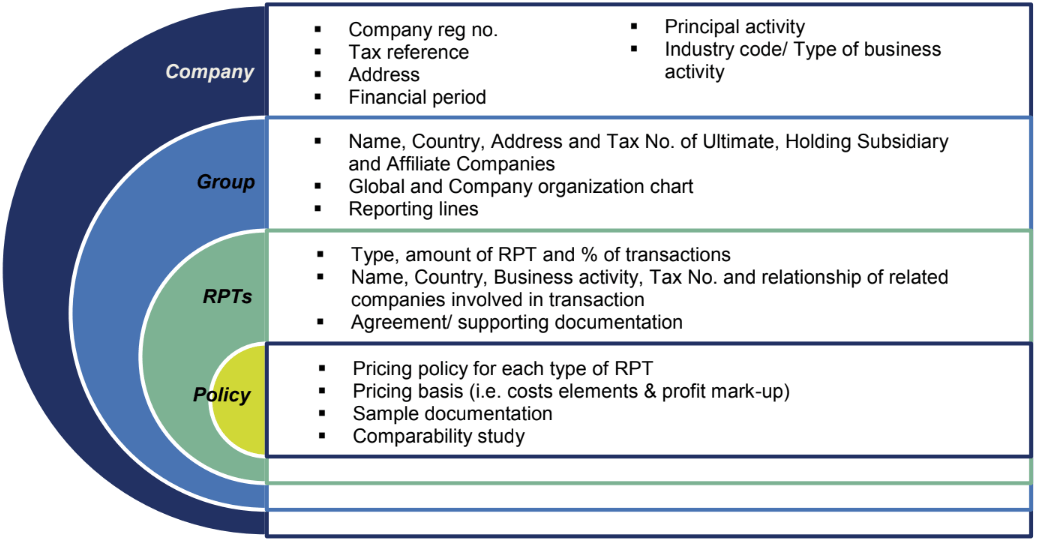
Prior to FY 2022, Companies that fall outside the scope of the threshold amounting RM25 million for revenue and RM15 million of RPTs. A simplified TP documentation consists of items (f), (h) and (i) as listed above. Taxpayer is allowed to apply any method other than the five methods described in the TPG provided it results in arm’s length outcomes.


f) Organizational Structure
(i) the taxpayer’s worldwide organizational and ownership structure covering all associated persons whose transactions directly or indirectly affect the pricing of the documented transactions; and
(ii) a description of the management structure of the local entity, a local organization chart, and a description of the individuals to whom local management reports and the country(ies) in which such individuals maintain their principal offices.


(h) Controlled Transactions
(i) description of details of the property or services to which transaction relates; any intangible rights or property attached thereto, the participants, the scope, timing, frequency, type and value of the controlled transactions (including all relevant related party dealings in relevant geographic markets);
(ii) names and addresses of all associated persons, with details of the relationship with each such associated person;
(iii) the nature, terms (including prices) and conditions of transactions (where applicable) entered into with each associated person and the quantum and value of each transaction;
(iv) an overview description of the business, as well as a functional analysis of all associated persons with whom the taxpayer has transacted;
(v) all commercial agreements setting forth the terms and conditions of transactions with associated persons as well as with third parties; and
(vi) a record of any forecasts, budgets or any other financial estimates prepared by the person for the business as a whole and for each division or product separately.


(i) Pricing Policies
Details of pricing policy for each type of controlled transaction shall include:

(i) the formula adopted, including anticipated profit margin/mark-up and cost component;
(ii) how the formula is applied;
(iii) who determine the pricing policy & how often is the policy being revised;
(iv) sample of documents to support the pricing policy; and
(v) comparability study to ensure the arm’s length price.

Minimum TPD Template (PIN 1/2023)

The template was originally released in 2022 to simplify compliance for SMEs and reduce administrative burden of compliance. Companies that fall below the threshold can choose to fill in the details requested in the minimum TPD template.


The template is a form that consists of 4 parts as follows:

Minimum Transfer Pricing Documentation Template

Income Tax (Country-by-Country Reporting) Rules 2016 (“CbyCR Rules”)

The tax authorities issued the CbyCR Rules followed by the Labuan CbyCR Regulation, effective from 1 January 2017 and is applicable to MNE Groups with total consolidated group revenue of at least RM 3 billion. The rules state that the ultimate parent (reporting entity) would have to complete the CbyC Report and submit it to the tax authorities on or before 12 months from the last day of the reporting FY (i.e. 31 December 2023 if the tax payer’s year end is 31 December 2022).


Additionally, there is also a requirement for the Malaysian Companies to notify the tax authorities under Subrule 6(1) and 6(2) of the PU (A) 357/2016, by disclosing the information in the tax returns or by submitting the manual notification form. 


Malaysian parent entities and subsidiaries submitting the Form C , TR , TA , TC or TN can furnish the notification by way of tax returns while companies filing Form LE & TF are required to furnish the notification using a manual notification form:

Reporting entity
[Annex B1]

The reporting entity shall notify the Director General in writing if it is the ultimate holding entity on or before the last day of the FY. Details of all Malaysian and foreign non-reporting constituent entities must be included

Non-reporting entity
[Annex C1 & C2]

The Malaysian subsidiary must notify the Director General in writing of the identity and tax
residence of the reporting entity on or before the last day of the FY.

Tax Return Form

Throughout the year from FY 2014 to FY 2022, the income tax return form has been amended to include additional disclosures as follows:


a) Transfer Pricing Documentation and its related information
Tax payer is to disclose its characterization, other related information and all type of transactions they are involved in with a related party and the amount.


b) Disclosure of whether the taxpayer is subject to interest restriction under Section 140C.

Tax authorities introduced Restriction on deductibility of interest under Section 140C of the Income Tax Act 1967, effective 1 July 2019 onwards aimed at restricting the deduction of interest expense in relation to cross border transaction.

The Rules are applicable to:

  • companies who have been granted any financial assistance in a controlled transaction;
  • the total amount of any interest expense for all such financial assistance exceeds RM500,000 in the basis period.

The maximum amount of interest that is deductible is 20% of the Tax EBITDA. The balance is allowed to be carried
forward.


c) Disclosure on CbyCR
Tax payer is to disclose if CbyCR is relevant for the Group and fill in the relevant information of the reporting entity.

TP Penalties and Power to Disregard Structures

Failure to furnish contemporaneous TP documentation
With the introduction of Section 113B of the ITA, any person who fails to furnishing a contemporaneous TPD shall be liable to the following:


a) Fine of not less than RM20,000 and not more than RM100,000; or

b) Imprisonment for a term not exceeding six (6) months; or
c) Both.

Taxpayers can appeal on the decision with the Special Commissioners of Income Tax but the burden of proof is on the
taxpayers.


5% surcharge on TP adjustments
Under Section 140A (3C), the Director General may impose a surcharge of not more than 5% of the total transfer pricing adjustments regardless if there is any additional taxes payable by the taxpayers. Any surcharge imposed shall be treated as collection tax.


Power to disregard structure in controlled transactions
Under S140A (3A) and (3B), the Director General will be empowered to disregard any related party transaction structure adopted by the company if he is of the opinion that:

a) The economic substance of that transaction differs from its form; or
b) The commercial reality of that transaction differs from the arrangement which would have been adopted by an
independent party.
In these circumstances, the Director General will be allowed to make adjustments to the structure to reflect the structure
that would have been adopted in a third party arrangement.


Failure to comply (after adjustments have been issued)
Penalties will be imposed under subsection 113(2) and the TP Audit Framework 2019. The rates can range from 30% to 100% depending on whether the TP documentation is prepared contemporaneously

Illustration on Penalties

Illustration On Penalties​ of failure to submit transfer pricing documentation
Illustration if calculation On Penalties​ of failure to submit transfer pricing documentation

Key Take-aways

  • Tax authorities have provided a cost efficient template for SME companies to encourage compliance
  • In addition to the template, taxpayers also need to include documentation or analysis to justify that the RPT is carried out
  • at market price (i.e. comparability study)
  • While there are exemptions to preparing TPD, it is not always possible determine whether adjustments will result in
  • additional tax until the audit is carried out
  • Keep in mind that the penalties have not been amended or adjusted for such exemptions. The risk of IRB imposing the
  • 5% surcharge on adjustments on top of remaining penalties are still present.
  • Burden of proof is on taxpayers to maintain the relevant records, documentation and calculation to justify the arm’s length
  • nature of the inter-company transactions
  • Taxpayers need to reassess the completeness and robustness of the TPD prepared previously and make amendments
  • where necessary
  • Even if taxpayer’s results fall within the new definition of the arm’s length range, taxpayers cannot take it for granted that
  • no adjustments will be made in the event of an audit.
  • Taxpayers must not take lightly the importance of justifying the selected TP method as the best possible method

How We Can Help

Our dedicated team of professionals has experience in various disciplines to respond effectively and efficiently to our clients’ individual requirements. This professional capability allows us to advise and plan strategies critical to our clients’ needs and success within the challenges of the present business environment.


Our service includes a total approach to our clients’ problems and needs. Using a team approach, our services are tailored to meet our clients’ individual requirements. We stress on a high degree of competence, professionalism and commitment among our team members.


We offer the following services with a clear focus on the business issues and regulatory requirements of the client’s industry:

  • Audit and Assurance
  • Tax & Transfer Pricing Advisory and Compliance
  • Business Advisory
  • China Desk
  • Financial and Transaction Advisory
  • Risk, Governance and Sustainability Advisory
  • Valuation Advisory
  • Migration Advisory
  • Offshore Advisory

Should you have any questions or require any assistance on the above, please do not hesitate to drop us an email or call us.


For more information, please view from PDF below