
Categories
Ideas & Insights Newsletter Tax

Introduction of New Tax Instalment Payment Schedule Effective YA 2028

Tax

Key Takeaway

From YA 2028, instalments start in the first month, with revisions allowing payments to align with updated tax estimates.
Under the existing rules, companies generally commence payment of their estimated tax from the second month of the basis period. Following the amendment, instalment payments will commence from the first month of the basis period.

Effective Date

The amendment will apply from Year of Assessment (“YA”) 2028 onwards. A transitional provision applies to YA 2027, under which companies will continue to commence their instalment payments from the second month of the basis period.
Year of Assessment Commencement of instalment payments
YA 2027 Second month
YA 2028 onwards First month
The change effectively brings forward the first tax instalment by one month and should therefore be considered in the company’s cash-flow planning.

Example:

Current Treatment
YA2028 and Subsequent years of assessment
The first instalment payment for the tax estimate shall be made in the second month of the taxpayer’s basis period and shall end in the first month of the basis period for the following year of assessment.
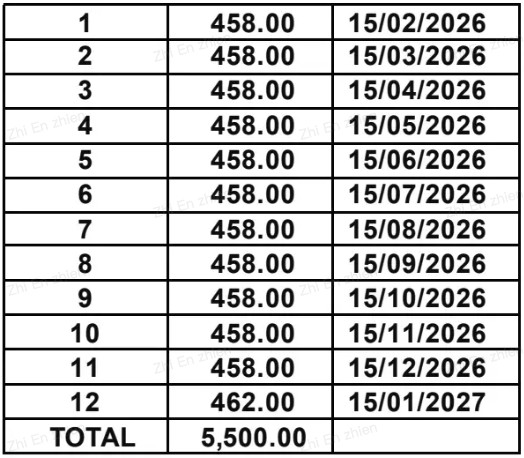
Current Treatment
1st instalment will be amended as the 1st month of the basis period and the last instalment ends in the same YA. Transitional period applicable for YA 2027 where the 1st instalment shall commence in the 2nd month and ended within the number of months in the basis period for YA 2027 (less one month).
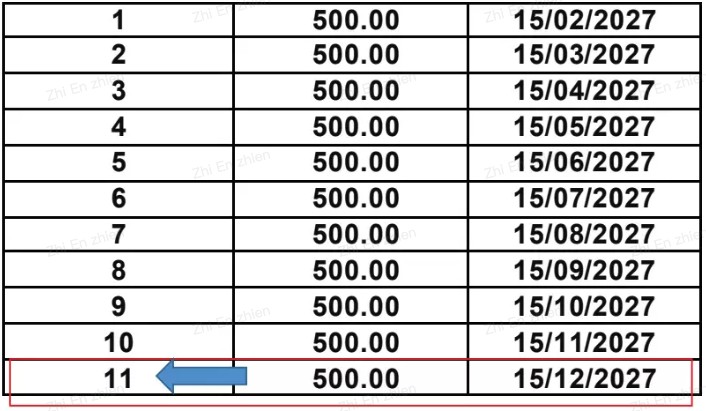
Key considerations for businesses

The earlier commencement of instalment payments from YA 2028 onwards may have a direct impact on companies’ tax cash-flow requirements.

Companies should consider:

  • updating their tax payment calendars for YA 2028 onwards;
  • incorporating the first-month instalment into cash-flow forecasts;
  • monitoring projected taxable profits throughout the basis period; and
  • reviewing whether a CP204A revision is appropriate where the original tax estimate is no longer representative.

Categories
Ideas & Insights Newsletter Tax

Optimizing Business and Investments with an Investment Holding Company

Tax

Key Takeaway

IHCs are subject to specific statutory provisions, which may affect expense deductions, capital allowances and the overall tax position.

Introduction

An Investment Holding Company (“IHC”) may provide a practical structure for separating investment assets from a group’s operating businesses. However, the suitability of an IHC should be assessed in the context of the group’s overall commercial objectives, particularly where tax efficiency is a key consideration.

The Inland Revenue Board of Malaysia (“IRBM”) has issued Public Ruling No. 2/2024 – Investment Holding Company, which sets out the relevant tax framework applicable to IHCs under the Income Tax Act 1967.

Why Does The Choice Of Structure Matter?

The decision to establish an Investment Holding Company (“IHC”) should be based solely on corporate and accounting considerations. The choice of structure may have significant tax implications, particularly as the nature of the company’s activities and sources of income may affect the tax treatment and deductibility of expenses incurred in holding and managing investments.

An IHC may incur various expenses, including:

  • directors’ and management expenses;
  • professional and advisory fees;
  • financing costs;
  • property-related expenses; and
  • other costs associated with the holding and management of investments.
For an unlisted IHC, section 60F provides a specific mechanism for determining the amount of certain expenses that may be deducted for tax purposes. These rules include a prescribed formula and a limitation linked to the investment income of the company.

An IHC should not be established on the assumption that:
higher expenditure = higher tax deduction.
The amount of accounting expenditure incurred does not necessarily translate into an equivalent tax deduction. The actual tax benefit may be substantially lower, particularly where the IHC is expected to incur significant recurring management, professional, administrative, and other investment-related costs.

The distinction between an operating company and an IHC

An operating company generally derives income from carrying on a business. An IHC, on the other hand, is principally concerned with holding investments and deriving income from those investments. This distinction is significant because the Income Tax Act 1967 contains specific provisions dealing with IHCs, including sections 60F and 60FA.

The tax rules applicable to an IHC are therefore not necessarily the same as those applicable to an ordinary operating company. This is particularly relevant where a group intends to move existing investments from an operating company into a newly incorporated IHC.

Capital Expenditure Should Also Be considered

Where an IHC acquires investment properties or other qualifying assets, the group may expect the associated capital allowances to reduce its overall taxable income. However, the IHC rules may restrict the utilisation of capital allowances depending on the income generated by the relevant source.

Conclusion

An IHC can be an effective corporate structuring vehicle, but it should not automatically be regarded as a tax-saving solution. The tax framework applicable to IHCs contains specific rules that can restrict the benefit of expenses, investment losses and capital allowances.
Categories
Ideas & Insights Newsletter Tax

Is Foreign Income Subject to Tax for Individuals?

Tax

Key Takeaway

Foreign income received in Malaysia may be taxable, with specific exemptions, conditions, documentation, and double-taxation relief available.
Malaysia generally operates on a territorial basis of taxation. Under section 3 of the Income Tax Act 1967 (“ITA 1967”), income accruing in or derived from Malaysia, as well as income received in Malaysia from outside Malaysia where applicable, may fall within the Malaysian income tax framework.

With effect from 1 January 2022, foreign-sourced income (“FSI”) received in Malaysia by a Malaysian resident is, in principle, brought within the scope of Malaysian taxation. However, specific exemptions are available for qualifying resident individuals.

For resident individuals, the key exemption is contained in the Income Tax (Exemption) (No. 5) Order 2022 [P.U.(A) 234/2022], as amended. The exemption generally covers foreign income received in Malaysia, other than income from a partnership business in Malaysia, subject to the relevant conditions.

What is “Income Received from Abroad”?

For purposes of the exemption order, “income received in Malaysia from outside Malaysia” refers to income arising from outside Malaysia which is brought into Malaysia. Accordingly, the distinction between:

  • income arising from Malaysia;
  • income arising outside Malaysia; and
  • whether the foreign income is actually received in Malaysia

is important in determining the Malaysian tax treatment.
Examples of foreign income potentially relevant to an individual include:

  • foreign employment income;
  • foreign business or professional income;
  • foreign dividends;
  • foreign interest;
  • foreign rental income;
  • foreign royalties; and
  • other income of an income nature.

Exemption for Resident Individuals

A resident individual may qualify for an exemption from Malaysian income tax on most types of foreign income received in Malaysia under section 4 of the ITA 1967. However, this exemption does not apply to income from a partnership business in Malaysia.

One of the main conditions is that the foreign income must generally have been subject to a tax similar to income tax in the country where the income was earned. This condition may still be met in situations where:

  • Income tax or withholding tax was charged or paid in the foreign country;
  • No tax was charged because of the foreign country’s tax system;
  • The income was below the foreign country’s tax-free threshold;
  • The income was exempt from tax under a tax incentive; or
  • For certain foreign dividend income, the income was subject to tax at an underlying level or came from profits that benefited from certain tax rules or incentives.

Duration of the Individual Exemption – Important Update

The original exemption order applied from 1 January 2022 to 31 December 2026. However, the Income Tax (Exemption) (No. 5) Order 2022 (Amendment) Order 2024 amended the expiry date from 31 December 2026 to 31 December 2036.

Foreign Tax Credit – Where Malaysian Tax Arises

Where foreign income is not exempt, Malaysian tax may arise where the income falls within the Malaysian charging provisions. Where the same income is also subject to foreign tax, relief from double taxation may potentially be available under:

  • section 132 ITA 1967, where an applicable double taxation agreement or the relevant statutory conditions apply; or
  • section 133 ITA 1967, for unilateral relief in appropriate circumstances.
Categories
Ideas & Insights Newsletter Tax

Caregiving Leave Additional Employer Tax Deduction

Tax

Key Takeaway

Employers can claim extra tax deductions for eligible caregiving leave.
The Income Tax (Deduction for Payment of Additional Paid Leave for the Care of Child or Sick or Disabled Immediate Family Member) Rules 2026 [P.U. (A) 289/2026] were gazetted on 11 August 2026, introducing an additional tax deduction for qualifying employers that provide additional paid leave to employees to care for:

  • a child; or
  • a sick or disabled immediate family member.

The following employers are NOT eligible for this tax incentive:

  • companies directly or indirectly controlled by the employee
  • sole proprietorships, or
  • employers that are relatives of the employee, including:
    • a parent including a parent-in-law
    • a child including a stepchild or an adopted child
    • a sibling
    • a grandparent, a grandchild or a spouse.
What is the tax benefit? Who is considered an immediate family member? What are the key conditions?
  • A qualifying employer can claim an extra tax deduction of 50% of the qualifying salary paid to a full-time employee who is given additional paid leave to:
    • care for a child under 2 years old;
    • care for a sick immediate family member; or
    • care for an immediate family member with a disability.
  • spouse;
  • parents, including parents-in-law, step-parents and adoptive parents;
  • children, including stepchildren and adopted children;
  • siblings, including step-siblings and adopted siblings; and
  • grandparents
  • The employee must be a full-time employee;
  • For a sick immediate family member, a medical certificate from a Malaysian Medical Council-registered medical practitioner must confirm that a caregiver is required;
  • For a disabled immediate family member, certification from Department of Social Welfare must confirm that the family member is a person with a disability.
  • The relevant conditions are subject to verification by Talent Corporation Malaysia Berhad from 1 January 2025 to 31 December 2027.
  • The additional deduction is limited to 12 consecutive months for each year of assessment
Categories
Ideas & Insights Newsletter Tax

6% Service Tax Exemption On Certain Construction Services To Overseas Customers

Tax

Key Takeaway

Qualifying construction services to overseas customers are exempt from service tax.
The Royal Malaysian Customs Department has issued Service Tax Policy No. 5/2026, introducing a service tax exemption for certain construction services provided to customers outside Malaysia.

The exemption covers:

  • Construction of offshore facilities
  • Construction of onshore facilities
  • Conversion of ships into floating structures

The exemption applies where the customer is not established in Malaysia.

What Does This Mean For Businesses

If you are a Malaysian construction service provider carrying out qualifying work for a foreign customer, you generally do not need to charge or collect service tax on the qualifying services, provided the conditions under the policy are met.

The exemption applies with effect from 1 July 2025, notwithstanding that Service Tax Policy No. 5/2026 was only issued by the Royal Malaysian Customs Department on 8 September 2026.

However, the exemption is subject to specific conditions and documentation requirements.The service provider must:

  • Be registered under Group L of the Service Tax Regulations 2018;
  • Have a written and signed contract with the overseas customer;
  • Ensure the contract is stamped for stamp duty purposes;
  • Include the prescribed exemption statement on the invoice;
    “Service tax exemption under paragraph 34(3)(a) and subsection 34(4) of the Service Tax Act 2018 pursuant to Service Tax Policy No. 5/2026 dated 8 September 2026.”
  • Maintain the relevant contracts, invoices and supporting documents to substantiate the exemption and for verification by the Royal Malaysian Customs Department.

Service Tax Already Collected

Where service tax has already been charged and collected from customers from 1 July 2025 onwards, the amount collected must still be accounted for and paid to the Royal Malaysian Customs Department. Businesses should note that the policy does not provide for a refund of service tax that has already been collected, even if the services may now qualify for the exemption.
Categories
Ideas & Insights Newsletter Tax

At What Point Is Social Media Income Taxable

Tax

Key Takeaway

Influencer income is taxable under Section 4(a) of the ITA, whether received in cash or in kind, and whether from local or overseas platforms.
With the rapid growth of the creator economy, the Inland Revenue Board of Malaysia (“IRBM”) has issued the Guidelines on the Tax Treatment of Income Derived by Social Media Influencers on 14 January 2026, providing clearer guidance on how income arising from influencer activities is treated for income tax purposes.

Income earned through social media cannot be overlooked simply because it is received through digital platforms, paid by overseas companies, or provided in non-cash form. From platform monetisa- tion and brand sponsorships to promotional fees, free products and other benefits, influencers may have income tax obligations that extend well beyond their cash receipts. This Tax Newsletter highlights the key tax considerations under the Guidelines.

Who Is a Social Media Influencer for Tax Purposes?

Under the Guidelines, an individual may be regarded as a social media influencer if they use their influence, knowledge, position or relationship with users to influence others through social or digital media. In simple terms, the Guidelines may apply to individuals who use social media to create content, promote products or services, or generate income through their online influence.

Influencer activities may include:
content-icon

Creating content

producing, recording, publishing, uploading or displaying written, audio or video content.
appearance-icon

Making appearances

participating in programmes, activities or events through social media.
Promoting-icon

Promoting products or services

advertising, endorsing or marketing products or services online.
income-icon

Receiving income or benefits

earning money or receiving gifts, products, services or other benefits from social media activities.
The Guidelines recognise two broad categories of social media influencers:
Category Examples Tax Treatment
Individual Influencer Artistes, athletes, professionals, students, homemakers and other content creators Income earned by individual influencers is generally treated as business or professional income under Section 4(a) of the ITA. This applies whether the income is earned under a formal contract or an informal arrangement.
Object-Based Influencer Animated or cartoon characters; film or drama characters; logos, symbols; or names associated with an organisation or company
(Eg; Upin & Ipin and BoBoiBoy)
The account or character owner receiving the income is generally subject to tax.

If the copyright owner and account owner are different, the tax applies to the party that ultimately receives the income.

Types of Income Subject to Tax

Income Type Examples
Social Media Monetisation Payments based on views, likes, followers, advertisements, subscriptions and clicks
Brand Collaborations Sponsorship, endorsement, promotional and campaign fees
Sale of Products Merchandise and other products sold through social media
Sale of Social Media Accounts Sale or transfer of social media accounts or IDs
Royalties Royalties from characters or content used on social media
Non-Cash Benefits Free products, services, vouchers, discounts and other benefits
Income from Overseas Platforms Payments received from foreign social media platforms
Overseas Promotional Activities Promotional work carried out overseas as part of the influencer's Malaysian profession

Claimable expenses

Influencers may claim tax deductions under Section 33(1) of the Income Tax Act 1967 (“ITA”) for expenses wholly and exclusively incurred in generating their influencer income. These may include internet and data costs, filming and editing fees, content production costs and other expenses directly related to the influencer’s income-generating activities.

Capital Allowance

Influencers may claim capital allowances under Schedule 3 of ITA on qualifying assets used in their influencer activities, such as cameras, lighting equipment and other content production equipment, subject to the applicable conditions.
Categories
Ideas & Insights Newsletter Tax

RM3 Million e-Invoice Exemption Threshold: Eligible Taxpayers May Discontinue e-Invoice Issuance Without Prior HASiL Approval

Tax

Key Takeaway

  • The e-Invoice implementation threshold has been increased from RM1 million to RM3 million, effective 1 September 2026.
  • Taxpayers who have already started e-Invoicing but now qualify for the exemption may stop issuing e-Invoices without applying to HASiL.
The Inland Revenue Board of Malaysia (“IRBM”) has clarified that businesses with annual turnover or revenue below RM3 million that satisfy the prescribed exemption criteria will not be subject to compliance action or penalties, even if they have not issued e-Invoices from their applicable implementation date. The clarification was provided in the latest e-Invoice Frequently Asked Questions (FAQ) issued by IRBM dated 4th August 2026.

Immediate Cessation of e-Invoice Without Prior Approval

Taxpayers who qualify for the e-Invoice exemption but have already commenced e-Invoice implementation may discontinue issuing e-Invoices immediately. Importantly, taxpayers are not required to submit a separate application to IRBM or obtain prior approval to cease e-Invoice implementation.

Under the latest clarification, taxpayers with annual turnover or revenue below RM3 million who satisfy the exemption conditions set out in Section 1.6.10 of the e-Invoice Guideline are eligible for the exemption.

Voluntary e-Invoice Implementation Remains an Option

Businesses that qualify for the exemption are not prohibited from continuing with e-Invoice implementation. Taxpayers may voluntarily continue issuing e-Invoices if they consider it beneficial for their business operations, accounting processes or broader digitalisation efforts.

Tax Incentives

The e-Invoice FAQs also summarise the tax incentives available to eligible taxpayers in relation to e-Invoice implementation, including Accelerated Capital Allowance (ACA) incentives. The applicable incentives, together with their legislative reference or status, key details, and effective period, are set out in a table.

Special Voluntary Disclosure Programme (“SVDP”)

FAQs No 123–133 provide taxpayers with greater certainty on the practical application of the e-Invoice SVDP, particularly in relation to historical rectification, the 72-hour cancellation rule, incorrect classifications, subsequent disclosures, consolidated e-Invoices, group entities and third-party service providers. Taxpayers should consider undertaking a review of their historical e-Invoice transactions to identify any outstanding non-compliance and, where appropriate, regularise the position during the SVDP period ending 31 December 2027.
Categories
Ideas & Insights Newsletter Tax

Employee Secondment Is Free From Service Tax Subject To Certain Conditions

Tax

Key Takeaway

A secondment arrangement is not automatically non-taxable. Its Service Tax treatment depends on whether the applicable conditions for a genuine secondment are satisfied.

Tips

  • Review your existing employee secondment arrangements to ensure they meet the conditions under Ketetapan Umum Bil. 5/2026;
  • Identify arrangements that do not meet the prescribed conditions and assess whether Service Tax should be charged on the relevant employment services.
Under the 2024 Guide on Employment Services, employment services are generally subject to Service Tax. However, employee secondment is excluded from the scope of taxable employment services.

With the issuance of General Ruling Bil. 5/2026, Customs has now clarified what qualifies as an employee secondment. In simple terms, a secondment arrangement will not be subject to Service Tax only if all the prescribed conditions are met.

A secondment arrangement will be regarded as non-taxable services only if all of the following conditions are satisfied:

Appropriate contractual documentation

The arrangement should be supported by a formal secondment agreement or other relevant documentation evidencing the nature and terms of the secondment;

Original employer is not an employment-service provider

The original employer’s business must not be the provision of employment services, including an employment agency or professional employer organisation;

Temporary transfer

The employee is temporarily transferred to perform duties for another company for a specified period and subsequently returns to the original employer;

Continuing employment relationship

The employee remains employed by the original employer, with the employment relationship continuing throughout the secondment;

Exclusive service during secondment

During the secondment period, the employee works solely for the host company;

Control by the host company

The host company has overall control over the employee’s work and duties during the secondment; AND

Salary / allowances recovered at cost only

The host company bears the employee’s remuneration and relevant allowances, whether paid directly or indirectly, without an additional service fee, commission or mark-up.
Categories
Ideas & Insights Newsletter Tax

e- Invoice: RM3 Million Is the New Threshold!

Tax

Key Takeaway

e-Invoice exemption threshold increased from RM1 million to RM3 million, effective 1 September 2026.

Tips

  • Check your annual turnover/revenue against the RM3 million threshold.
  • Check ownership and group structures before relying on the exemption, particularly shareholders, holding companies, related companies and joint ventures.
The Inland Revenue Board of Malaysia (“IRBM”) issued e-Invoice Guideline Version 4.8 on 30 August 2026, replacing Version 4.7 dated 7 July 2026. The key amendments relate principally to the e-Invoice implementation timeline and the exemption threshold for taxpayers with annual turnover or revenue below RM3 million.

This represents a significant relaxation for taxpayers with turnover between RM1 million and below RM3 million, who were previously within the e-Invoice framework.

The amendments comprise changes to paragraphs 1.5 and 1.6.1(e), together with the introduction of new paragraphs 1.6.9 and 1.6.10 as below:

Implementation timeline for new businesses

Paragraph 1.5 has been amended to reflect the revised RM3 million threshold in determining the e-Invoice implementation timeline for businesses that commence operations between 2023 and 2025. Businesses that commenced operations during this period should reassess their e-Invoice implementation date based on the revised RM3 million threshold.

Exemption threshold increased

The exemption threshold has been increased from RM1 million to RM3 million.

Specific taxpayers brought into the e-Invoice requirement

This Guide further clarifies the e-Invoice treatment applicable to the following entities:

  • Statutory bodies;
  • Statutory authorities;
  • Local authorities; and
  • International organisations.

These entities are required to issue e-Invoices for goods sold or services performed from 1 July 2025 onwards.

Conditions restricting the RM3 million exemption

The exemption for taxpayers with annual turnover / revenue of less than RM3 million applies across taxpayer categories, including individuals, partnerships, companies and cooperatives. However, the exemption does not apply in certain ownership or group-structure circumstances:-

Taxpayer with annual turnover or revenue of less than RM3 million shall not be eligible for the exemption where any of the following conditions apply:

  • Non-individual shareholder
    The taxpayer has a non-individual shareholder (or equivalent) with annual turnover / revenue of RM3 million or more.
  • Subsidiary
    The taxpayer is a subsidiary of a holding company whose annual turnover / revenue is RM3 million or more.
  • Related company / joint venture
    The taxpayer has a related company or joint venture with annual turnover / revenue of RM3 million or more.
Categories
Ideas & Insights Newsletter Tax

Employment Service: Fees Subject Service Tax While Salary Recoveries, Disbursement Costs & Statutory & Regulatory Charges Are Excluded

Tax

Key Takeaway

Service Tax applies only to employment or management fees, excluding disbursement expenses.

Tips

To ensure that fees and disbursements are clearly stated and properly supported by documentation.
The Royal Malaysian Customs Department (“RMCD”) issued a new announcement on 13 August 2026, clarifying the Service Tax treatment of employment services, particularly with regard to employment / management fees and disbursement expenses.

Under the RMCD’s clarification:

  • Employment or Management fees
    Service Tax applies to the fees charged for the provision of employment services and management services;
  • Disbursement Costs
    Costs or expenses incurred on behalf of a customer and subsequently recovered on a pass-through (disbursement) basis are not subject to Service Tax;
  • Statutory and regulatory charges
    Fees, duties, levies, taxes, fines, penalties and other similar payments imposed under written laws and paid on behalf of the customer are treated as disbursements. These amounts should not be included in the taxable value for Service Tax purposes.