Category: Ideas & Insights
Johor-Singapore Special Economic Zone (JS-SEZ)
- Post author By admin
- Post date April 16, 2025
- No Comments on Johor-Singapore Special Economic Zone (JS-SEZ)
Johor-Singapore Special Economic Zone (JS-SEZ)
Introduction
Effective from January 1, 2025, companies undertaking new investment in high-growth sectors within the JS-SEZ eligible to apply for special corporate tax rate of 5% for up to 15 years, 15% tax rate up to 10 years for knowledge workers employed in the JS-SEZ, stamp duty exemption etc.
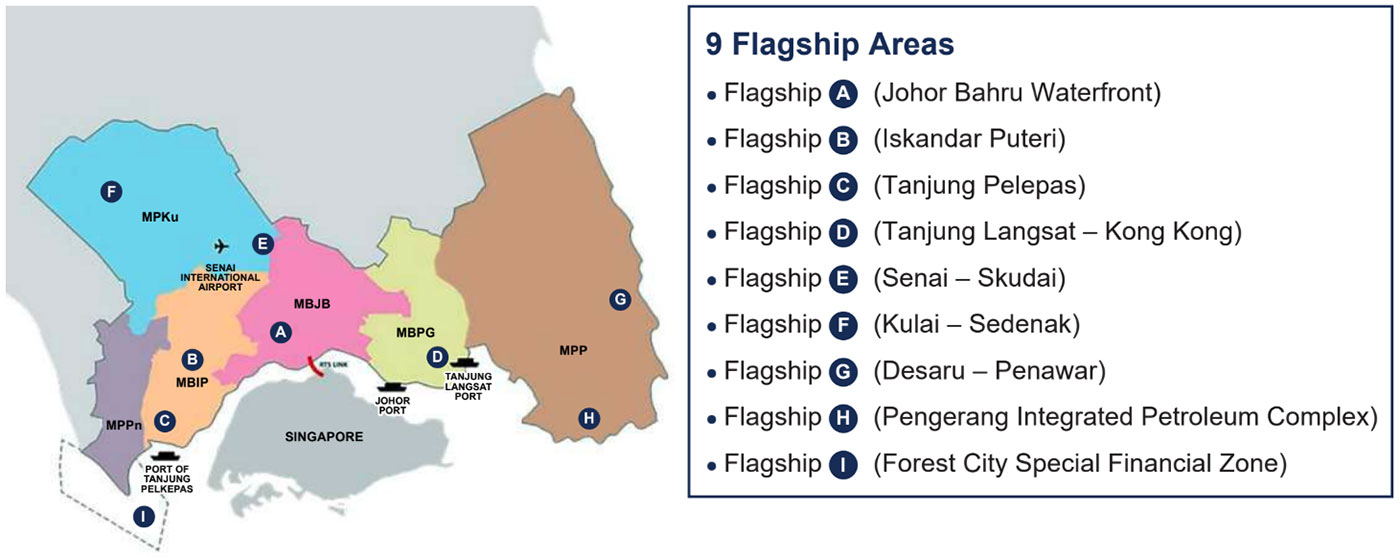
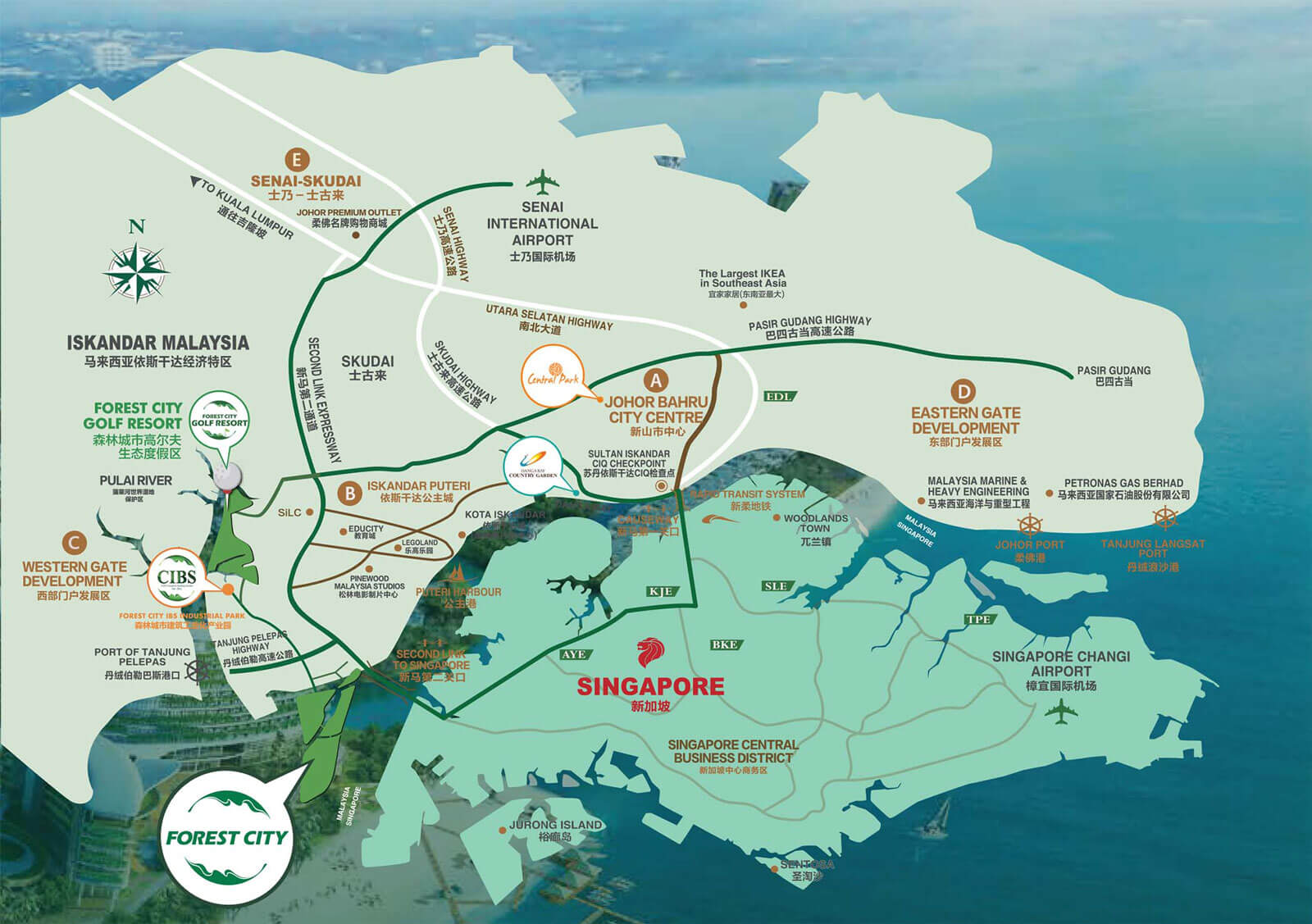
Location
Why Invest in JS-SEZ
Competitive Tax Incentive
A. Special Tax Corporate Tax Rate:
No.
Manufacturing Company:
- Artificial Intelligence (AI), Quantum Computing Supply Chain;
- Medical Devices; or
- Pharmaceuticals.
Flagship E (Senai – Kulai)
Aerospace Manufacturing; and Maintenance Repair and Overhaul (MRO) Services.
2.
Flagship B (Iskandar Puteri)
Global Service Hub.
Qualifying Services:
- Regional P&L;
- Strategic Business Planning;
- Corporate Development; and
- Regional or Global Treasury and Fund management conducting cash pooling activities via onshore intermediaries.
Eligibility Criteria / Conditions
- Annual operating expenditure of at least RM50 million;
- Company must Serve / Business Control of at least 10 Network Companies;
- Annual sales turnover of at least RM500 million and forex in-flow into the local banking system as proposed;
- A minimum of 50% of high-value positions (with a minimum monthly basic salary of RM10,000) shall be filled by full-time Malaysian employees as proposed.
Integrated Tourism Development
Eligibility Criteria / Conditions
- Company which does not have an existing entity or related entity undertaking same hotel or tourism project in Malaysia;
- Paid-up capital of at least RM2.5 million;
- Investment in capital expenditure (excluding land) of at least RM500 million;
- Company undertaking integrated tourism project which consists of the
following:
- Hotel with minimum number of rooms of 80 which consists of standard, superior, deluxe and suite; and
- Minimum 1 tourist attractions (i.e. water park, outdoor park consists of rides and/or games, convention centre with capacity minimum of 3,000 participants, or outdoor sport excluding golf course and driving range).
4.
Smart Logistics Complex
Smart logistic operator who invests in development of smart logistics and carry out any of the eligible logistic activities:
a. Regional Distribution Hub;
b. Integrated Logistics Services;
c. Dangerous Goods Storage;
d. Cold Chain Facilities
Eligibility Criteria / Conditions
- Investment in capital expenditure (excluding land) of at least RM500 million;
- The built-up area of the smart warehouse complex must be at least 50,000m2 and equipped with at least three (3) enabling elements technologies under the IR4.0;
- Use the application of modern construction techniques i.e. achieving a score for the Industrial Building System (IBS) that has been set by the Construction Industry Development Board (CIDB)
- Total full-time workforce must consist of at least 80% Malaysian citizens;
- A minimum of 30% of total high-value positions (with a minimum basic salary of RM10,000) shall be filled by full-time Malaysian employees.
Manufacturing – Downstream Specialty Chemicals
Eligible product(s) / activity(ies):
a. Base Chemicals;
b. Organic intermediates C1 to C6
c. Specialty chemicals;
d. Fertilizers;
e. Polymers / Plastics;
f. Oleo chemical / Biochemical.
60% or 100% Investment Tax Allowance (“ITA”) on eligible capital expenditure (excluding land cost) for a period of 10 years.
Eligibility Criteria / Conditions
- A new company or an existing company undertaking diversification activities in relation to the eligible activities / products under this cluster;
- The company is required to have a minimum paid-up capital of RM2.5 million at the point of submission of application to MIDA;
- 440% stamp duty exemption on the instrument of transfer/ financing agreement for the purchase of a commercial property in Flagship A and B that remains unsold as at 31st December 2024. The stamp duty exemption to be provided under Section 80(1) under the Stamp Act 1949;
- A deduction equivalent to amount not exceeding RM1 million for each year assessment in respect of cash contribution or contribution in-kind by qualifying person who sponsors a hallmark event.
- The hallmark event referred to is an event of regional or international significance which is carried on in Flagship G and supported/ verified by MOTAC. For contribution made between 1 January 2025 to 31 December 2034.
- ACA in respect of renovation costs incurred on a building or part of a commercial building located in Flagship A-G for the purpose of qualifying company’s business. Qualifying companies are companies that have been approved any tax incentives under PIA 1986 or ITA 1967 between 1 Jan 202 – 31 December 2034 and operating in Flagship A-G. This incentive to be utilized only once throughout their business operation in JS-SEZ.
To include expenses on:
- General electrical installation
- Lighting
- Gas system
- Water system; Kitchen fittings
- Sanitary fittings
- Door, gate, window, grill and roller shutter
- Fixed partitions
- Flooring (including carpets)
- Wall covering (including paint work)
- Incentives & Eligibility Criteria
- False ceiling and cornices
- Ornamental features or decorations excluding fine art
- Canopy or awning
- Recreation room for employee
- Air-conditioning system
- Day care centre for employees’ children
- Surau
- Reception area
- Green elements, smart solutions systems
B. Special Tax Rate for Knowledge Workers:
A special tax rate of 15% for a period of 10 years is provided for eligible knowledge workers in all Flagships.
Eligibility Criteria / Conditions:
- Malaysian/Non-Malaysian citizen;
- Not generating employment income in Malaysia 24-months prior;
- Salary abroad/in Malaysia >RM20,000 per month.
- Subject to academic qualifications / years of professional work experience
- Subject to MyCOL profession and JS-SEZ qualifying sectors
Family Office Incentive Scheme in Forest City Free Trade Zone (FCFTZ)
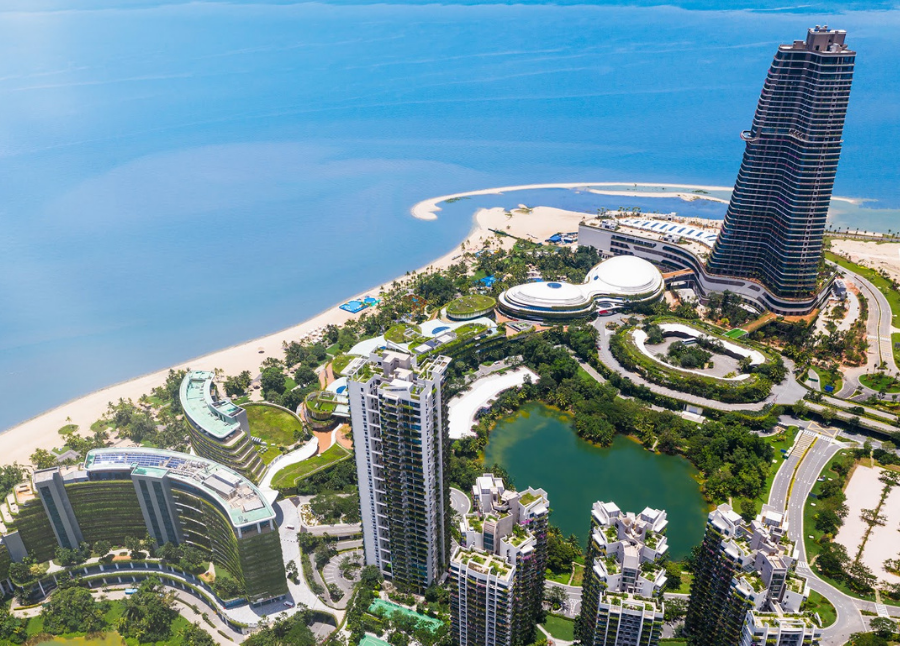
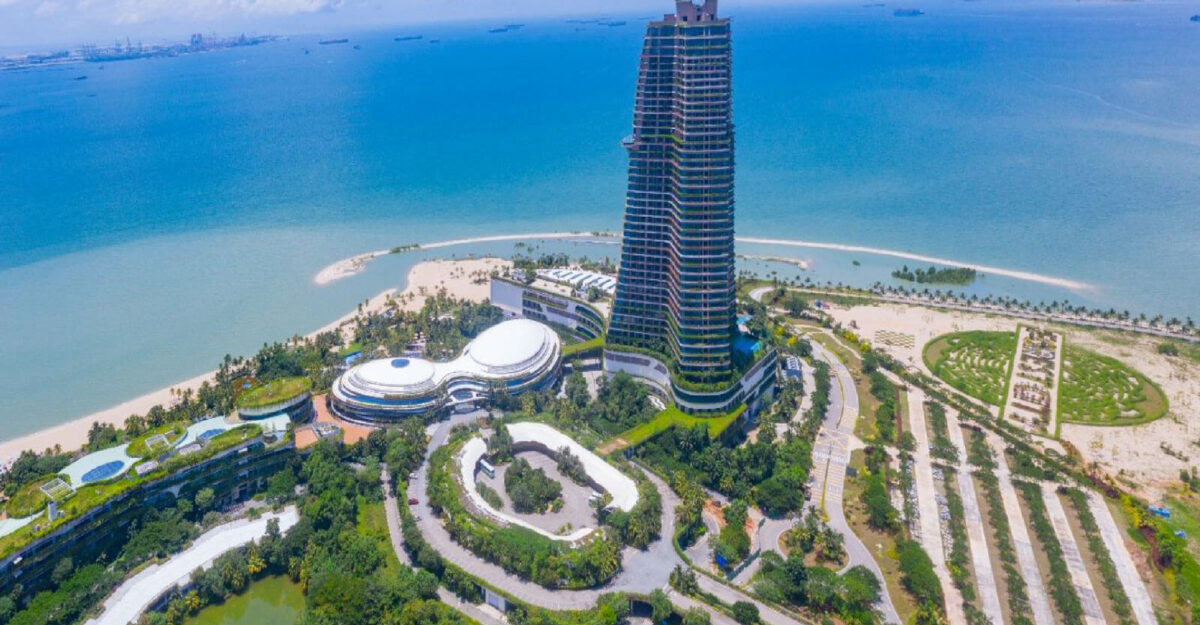
Forest City Special Financial Zone (FCSFZ)
Pulau Satu, Forest City is the first location in Malaysia to offer a zero (0%) percent tax rate for Family Office established under the Single Family Office Scheme.
Source: https://forestcitycgpv.com
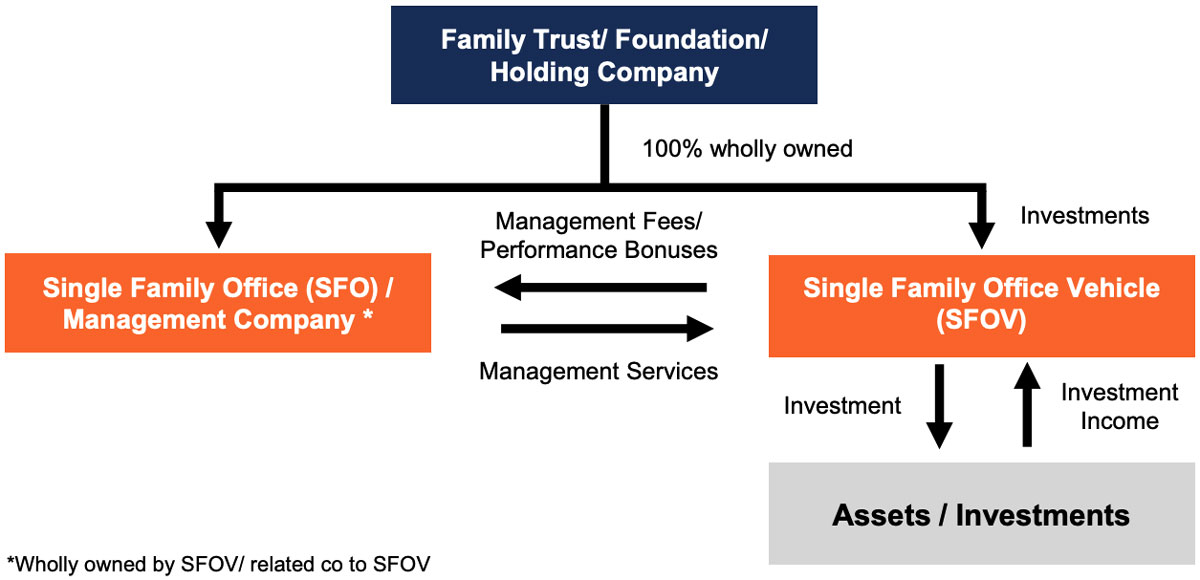
Single Family Office (SFO) & Single Family Office Vehicle (SFOV)
What is Single Family Office (SFO)?
- SFO is a corporate vehicle;
- Wholly owned or controlled by members of a single wealthy family;
- Created to exclusively manage the assets, investments and long-term interests of that family;
- SFO may also represent multiple generations and branches of the family.
What is Single Family Office Vehicle (SFOV) ?
- SFOV is a corporate vehicle;
- Wholly owned or controlled by members of a single wealthy family;
- Established solely for the purposes of holding the assets, investments and long-term interest of members of the single family.
SFO vs SFOV
Key Conditions on SFOVs Tax Incentives
Conditions
RM30Mil (*USD7Mil)
RM50Mil (*USD11.5Mil)
MALAYSIA GREEN INVESTMENT TAX ALLOWANCE (GITA) FOR OWN COMSUMPTION
- Green Investment Tax Allowance (GITA) Project for Business Purposes;
- Green Investment Tax Allowance (GITA) Asset for Own Consumption; and
- Green Income Tax Exemption (GITE) Solar Leasing
(i) Investment Tax Allowance :
- The qualifying capital expenditure must be an approved asset by MOF that have been verified by MGTC and is listed under the MyHIJAU Directory;
- For Green Building, the qualifying CAPEX must be verified by the locally Green Building Rating Tools/ Certification Body approved by Government;
- The asset must be new and owned by the Company;
- The asset must be used in the business carried out by the company in Malaysia for own consumption and not for income generation.
- Electric vehicles (for commercial / industrial used only);
- EV Infrastructure;
- Green Building;
- Energy Storage
- Energy Efficiency;
- Renewable Energy System;
- Waste Composter or waste recycling;
- Wastewater recycling or rainwater harvesting
(ii) Eligibility Criteria:
- A newly established company that incurred qualifying capital expenditure under GITA Asset; OR
- Existing Company operating in Malaysia but has not incurred qualifying capital under GITA Asset and has not been approved for Green Technology Incentive.
- The project carried out in building/location separately from activities carried out by holding company or related companies;
- The plant, machinery and equipment used shall be separately used and shall not be transferred from holding company or related companies;
- Not shares the same employees as per holding company or related companies except for the management staff and directors of the Company;
- This project must not result in a reduction in the investment of holding company or related companies.
- Minimize the degradation of the environment or reduce greenhouse emission;
- Promotes health and improvement of environment; and
- Conserves the use of energy, water and/or other forms of natural resources or promote the use of renewable energy or able to recycle waste material resources.
Why Singapore? Key Advantages Video
- Post author By admin
- Post date September 26, 2024
- No Comments on Why Singapore? Key Advantages Video
WHY SINGAPORE
- Tags Video, Video - Tax
Malaysia Cold Chain Facilities
- Post author By admin
- Post date March 18, 2024
- No Comments on Malaysia Cold Chain Facilities
Malaysia Cold Chain Facilities
Companies providing cold chain facilities and services for perishable agricultural products i.e. fruits, vegetables, flowers, ferns,
meat and aquatic products are eligible for:
Pioneer Status with tax exemption of 70% of statutory income for a period of
5 years;Unabsorbed pioneer losses after the end of pioneer period are allowed to be
carried forward for 7 consecutive year of assessments;
ORInvestment Tax Allowance (ITA) of 60% on the qualifying capital expenditure
incurred for 5 years;Unutilised allowances can be carried forward until fully absorbed.
(Company intend to reinvest in cold chain facilities for perishable agricultural produce)
- Pioneer Status with tax exemption of 70% of increased statutory income for
a period of 5 years; - Unabsorbed pioneer losses after the end of pioneer period are allowed to be
carried forward for 7 consecutive year of assessments;OR
- Investment Tax Allowance (ITA) of 60% on the additional qualifying capital
expenditure for 5 years; - Unutilised allowances can be carried forward until fully absorbed.
- Must be Independent Service Provider (i.e the company conducts all of the cold chain activities on its own);
- At least 60% of the company’s revenue must be derived from the provision of cold room facilities, refrigerated transportation and other related services for local agriculture produce.
- Provision of cold room facilities or refrigerated transportation for local agricultural produce with or without other post-harvest activities including cleaning, washing, grading, freezing/chilling and packing;
- Provision of cold room facilities or refrigerated transportation for local processed food products.
Malaysia Global Services Hub Tax Incentive
- Post author By admin
- Post date February 8, 2024
- No Comments on Malaysia Global Services Hub Tax Incentive
MALAYSIA GLOBAL SERVICES HUB TAX INCENTIVE
1. Overview Of The Incentive
Tier 2 : 5%
(ii) Services and B Existing Company trading income
Tier 2: 10% on value added income
(ii) Services and B Existing Company trading income
2. Qualifying Services and Additional Services
- Regional P&L / Business Management Unit;
- Strategic Business Planning;
- Corporate Development;
AND
Any 2 qualifying activities under the services category as follows: - Strategic services;
- Business services;
- Shared services;
- Other services.
3. Outcome-based conditions
- Annual operating expenditure;
- High value full time employees;
- C-suite with minimum salary of RM35,000;
- Locally ancillary services;
- Collaboration with higher education institution/TVET;
- Training for Malaysian students/citizen;
- Environmental. Social and Governance (ESG) elements; or
- Other conditions as determined by the Minister of Finance.
Why Dubai
One of the LOWEST TAX RATES in the world, embracing 0% Corporate Tax in the UAE
Tax Exemptions for Companies in Dubai vs Malaysia
New 2023 Transfer Pricing Rules
- Post author By admin
- Post date November 14, 2023
- No Comments on New 2023 Transfer Pricing Rules
New 2023 Transfer Pricing Rules
TP Rules 2023
TP Rules 2023 – Detailed Description
- “Contemporaneous” TPD must be prepared before the filing of the tax return for the relevant year of assessment.
- While this is not a new requirement, it has now been made clearer in the rules and it allows the Tax Authorities to penalize taxpayers who did not prepare the TPD in a timely manner.
- The requirement to include the date of completion in the TPD is in line with the Tax Authorities’ intention to increase compliance and to have concrete written evidence as to whether the TPD was prepared before or after the filing of the tax returns.
- Contemporaneous Full TPD must now include additional information on the MNE Group that is relevant to the taxpayer’s business in Malaysia. Alternatively, the taxpayer can attach the Master file prepared by the Group or ultimate holding company with the Local TPD.
- Previously this requirement was only applicable for Group of Companies that is required to submit the Country-by-Country Report.
- In the absence of any Master File, the local taxpayer will have to request for this information from the ultimate parent company to include in the Local TPD.
- The Tax Authorities have also included a detailed list of information and/or documentation to be included or attached in the Local TPD.
- Based on the above, taxpayers must indicate in the TPD if any of the information or documents required are not applicable to the taxpayers. Failure to do so will result in an incomplete TPD.
- Previously the Guidelines requests taxpayers to select the TP method on a hierarchy basis which means that the Comparable Uncontrolled Price (“CUP”) must be considered first before the other methods on the list.
- However, now the requirement is that the best method is selected and can be supported by explanation and sufficient reasoning to justify the selection.
- There is also a clause that allows the Director General to disregard the taxpayer’s selected method and replace with a different method if they are the opinion that it is not the most appropriate method.
- The Tax Authorities general practice or expectation previously was for taxpayers to achieve results that is above the median of the benchmarking analysis or to make an adjustment to the median of the benchmarking.
- The new rules have included a definition for the arm’s length range from 37.5 percentile to 62.5 percentile and that Companies’ who fall within the range may be regarded as arm’s length.
- However, taxpayers should be aware that the Director General has the power to make any TP adjustment to the median or any other point above median and within the arm’s length range if there is reason to believe that the comparable companies selected is not suitable.
- The Director General may allow for use of data from the review period and prior years if it can be proven that life cycles or business cycles of the property/services are not impacted by the conditions of commercial or financial relations between associated persons.
- However, this can only be used to assist in the selection of comparable and not for the use of multiple year averages.
- Previously this dateline was only included in the TP Guidelines. It has not been included in the Rules as well.
- Failure to submit the TPD within 14 days will result in penalties even if there is no adjustments made or additional taxes payable.
- Emphasizes the importance of the Development, Enhancement, Maintenance, Protection and Exploitation (“DEMPE”) analysis for intangible property
- Any party that contributes to the functions above should be entitled to an arm’s length consideration, regardless of legal ownership
Key Take-aways
- Burden of proof is on taxpayers to maintain the relevant records, documentation and calculation to justify the arm’s length nature of the inter-company transactions
- Taxpayers need to reassess the completeness and robustness of the TPD prepared previously and make amendments where necessary
- Even if taxpayer’s results fall within the new definition of the arm’s length range, taxpayers cannot take it for granted that no adjustments will be made in the event of an audit.
- Taxpayers must not take lightly the importance of justifying the selected TP method as the best possible method
Improving Transfer Pricing Compliance
- Post author By admin
- Post date August 11, 2023
- No Comments on Improving Transfer Pricing Compliance
Improving Transfer Pricing Compliance
Transfer Pricing Guidelines (“TPG”)
The 2012 Transfer Pricing Guideline was intended to provide detailed guidance to taxpayers on how to comply with the requirements of the law under Section140A of Income Tax Act 1967 and the TP Rules 2012. The 2012 TPG is applicable to:
- Controlled transactions between associated persons, where at least one party is assessable or chargeable to tax in Malaysia; and
- Applies to both cross-border transactions and domestic related party transactions.
The guidelines reinforces that companies involved in related party transactions in Malaysia should prepare a Transfer Pricing Documentation (“TPD”) for the year of assessment but not required to be submitted unless requested by tax authorities.
Companies who fall below this threshold may opt to prepare a minimal Transfer Pricing Documentation template (from FY 2022 onwards) instead of a full scope Transfer Pricing Documentation. Prior to FY 2022, Companies who fall below the threshold were required to prepare a limited scope Transfer Pricing Documentation.
The IRB released a TPD Flowchart to assists taxpayers in determining the circumstances where full or minimal TPD is required. Companies can be exempted from preparing if any adjustments made does not alter the total tax payable (i.e. both companies do not enjoy incentive, suffer losses or taxed at different rates)
Transfer Pricing Documentation (“TPD”) Flowchart
Transfer Pricing Rules 2023
The Income Tax (TP) Rules 2023 supersedes the rules that was released in 2012 and is effective from the year of assessment 2023. Significant changes were made with the intention to boost compliance and provide taxpayers with more clarity with regards to TP compliance. Some of the important changes that affect the way TPDs will be prepared moving forward:
Contemporaneous TP documentation requirements
A person who enters into a controlled transaction shall prepare a contemporaneous transfer pricing documentation which is brought into existence prior to the due date for furnishing a return in the basis period for a year of assessment in which a controlled transaction is entered into.
As per Transfer Pricing Rules 2023, the contemporaneous transfer pricing documentation shall contain:
- The date of completion in the TPD
- Additional information on the MNE Group that is relevant to the taxpayer’s business in Malaysia. Alternatively, the taxpayer can attach the Master file prepared by the Group or ultimate holding company with the Local TPD.
- A detailed list of information and/or documentation to be included or attached in the Local TPD
- Taxpayers must indicate in the TPD if any of the information or documents required are not applicable to the taxpayers.
- Failure to do so will result in an incomplete TPD.
- For the purposes of this rule MNE means a collection of enterprises related through ownership or control which is required to prepare consolidated financial statements
Method to determine arm’s length price
The person shall ensure that the best method selected and that it can be supported by explanation and reasons to justify the selection. However, the Director General may review the selected method and disregard the taxpayer’s selected method and replace with a different method if they are the opinion that it is not the most appropriate method.
Comparability of transactions
An uncontrolled transaction shall be used as a comparable in determining an arm’s length price of a controlled transaction. A person shall accurately delineate the controlled transaction by identifying the commercial or financial relations between associated person based on the economically relevant characteristics.
Intra-group Services
A person shall demonstrate that the intra-group services have been rendered and the provision of such services has conferred an economic benefit or commercial value to his business and the charge for the intra-group services is justified. Intra-group means services rendered between associated persons. Intra-group services shall be disregarded if it involves:
- Shareholder or custodial activities
- Duplicative services
- Services that provide incidental benefits or passive association benefits
- On-call services
Cost contribution arrangement
A person shall determine the arm’s allocation of cost for such arrangement is in accordance with the allocation that would been undertaken by an independent person in a similar arrangement.
Intangible property
Intangible property” refers to an asset which is neither a physical asset nor a financial asset but such asset is capable of being owned or controlled for use in commercial purposes, whose use or transfer would be compensated had it occurred in a transaction between independent persons in comparable circumstances which includes patent, invention, formula, process, design, model, plan, trade secret, know-how or marketing intangible.
Any party that contributes to the functions above should be entitled to an arm’s length consideration, regardless of legal ownership
Full Scope TPD
A full scope report may consist of the following:
a) Group worldwide organizational structure
b) Description of MNE Group businesses
c) MNE’s intangible assets
d) MNE’s intercompany financial activities
e) MNE’s financial and tax position
f) Local organizational structure and company background
g) Nature of business/industry and market conditions
h) Controlled transactions and Pricing policies including formula adopted and sample documents to justify
i) Assumption, strategies and information regarding factors that influenced the price setting policies
j) Functions, assets and risk analysis including risk analysis framework
k) Comparability analysis
l) Selection and application of the transfer pricing method including basis to justify the selection
m) Financial information
n) Other relevant/supporting documents
Simplified TPD
Prior to FY 2022, Companies that fall outside the scope of the threshold amounting RM25 million for revenue and RM15 million of RPTs. A simplified TP documentation consists of items (f), (h) and (i) as listed above. Taxpayer is allowed to apply any method other than the five methods described in the TPG provided it results in arm’s length outcomes.
f) Organizational Structure
(i) the taxpayer’s worldwide organizational and ownership structure covering all associated persons whose transactions directly or indirectly affect the pricing of the documented transactions; and
(ii) a description of the management structure of the local entity, a local organization chart, and a description of the individuals to whom local management reports and the country(ies) in which such individuals maintain their principal offices.
(h) Controlled Transactions
(i) description of details of the property or services to which transaction relates; any intangible rights or property attached thereto, the participants, the scope, timing, frequency, type and value of the controlled transactions (including all relevant related party dealings in relevant geographic markets);
(ii) names and addresses of all associated persons, with details of the relationship with each such associated person;
(iii) the nature, terms (including prices) and conditions of transactions (where applicable) entered into with each associated person and the quantum and value of each transaction;
(iv) an overview description of the business, as well as a functional analysis of all associated persons with whom the taxpayer has transacted;
(v) all commercial agreements setting forth the terms and conditions of transactions with associated persons as well as with third parties; and
(vi) a record of any forecasts, budgets or any other financial estimates prepared by the person for the business as a whole and for each division or product separately.
(i) Pricing Policies
Details of pricing policy for each type of controlled transaction shall include:
(i) the formula adopted, including anticipated profit margin/mark-up and cost component;
(ii) how the formula is applied;
(iii) who determine the pricing policy & how often is the policy being revised;
(iv) sample of documents to support the pricing policy; and
(v) comparability study to ensure the arm’s length price.
Minimum TPD Template (PIN 1/2023)
The template was originally released in 2022 to simplify compliance for SMEs and reduce administrative burden of compliance. Companies that fall below the threshold can choose to fill in the details requested in the minimum TPD template.
The template is a form that consists of 4 parts as follows:
Income Tax (Country-by-Country Reporting) Rules 2016 (“CbyCR Rules”)
The tax authorities issued the CbyCR Rules followed by the Labuan CbyCR Regulation, effective from 1 January 2017 and is applicable to MNE Groups with total consolidated group revenue of at least RM 3 billion. The rules state that the ultimate parent (reporting entity) would have to complete the CbyC Report and submit it to the tax authorities on or before 12 months from the last day of the reporting FY (i.e. 31 December 2023 if the tax payer’s year end is 31 December 2022).
Additionally, there is also a requirement for the Malaysian Companies to notify the tax authorities under Subrule 6(1) and 6(2) of the PU (A) 357/2016, by disclosing the information in the tax returns or by submitting the manual notification form.
Malaysian parent entities and subsidiaries submitting the Form C , TR , TA , TC or TN can furnish the notification by way of tax returns while companies filing Form LE & TF are required to furnish the notification using a manual notification form:
Reporting entity
[Annex B1]
The reporting entity shall notify the Director General in writing if it is the ultimate holding entity on or before the last day of the FY. Details of all Malaysian and foreign non-reporting constituent entities must be included
Non-reporting entity
[Annex C1 & C2]
The Malaysian subsidiary must notify the Director General in writing of the identity and tax
residence of the reporting entity on or before the last day of the FY.
Tax Return Form
Throughout the year from FY 2014 to FY 2022, the income tax return form has been amended to include additional disclosures as follows:
a) Transfer Pricing Documentation and its related information
Tax payer is to disclose its characterization, other related information and all type of transactions they are involved in with a related party and the amount.
b) Disclosure of whether the taxpayer is subject to interest restriction under Section 140C.
Tax authorities introduced Restriction on deductibility of interest under Section 140C of the Income Tax Act 1967, effective 1 July 2019 onwards aimed at restricting the deduction of interest expense in relation to cross border transaction.
The Rules are applicable to:
- companies who have been granted any financial assistance in a controlled transaction;
- the total amount of any interest expense for all such financial assistance exceeds RM500,000 in the basis period.
The maximum amount of interest that is deductible is 20% of the Tax EBITDA. The balance is allowed to be carried
forward.
c) Disclosure on CbyCR
Tax payer is to disclose if CbyCR is relevant for the Group and fill in the relevant information of the reporting entity.
TP Penalties and Power to Disregard Structures
Failure to furnish contemporaneous TP documentation
With the introduction of Section 113B of the ITA, any person who fails to furnishing a contemporaneous TPD shall be liable to the following:
a) Fine of not less than RM20,000 and not more than RM100,000; or
b) Imprisonment for a term not exceeding six (6) months; or
c) Both.
Taxpayers can appeal on the decision with the Special Commissioners of Income Tax but the burden of proof is on the
taxpayers.
5% surcharge on TP adjustments
Under Section 140A (3C), the Director General may impose a surcharge of not more than 5% of the total transfer pricing adjustments regardless if there is any additional taxes payable by the taxpayers. Any surcharge imposed shall be treated as collection tax.
Power to disregard structure in controlled transactions
Under S140A (3A) and (3B), the Director General will be empowered to disregard any related party transaction structure adopted by the company if he is of the opinion that:
a) The economic substance of that transaction differs from its form; or
b) The commercial reality of that transaction differs from the arrangement which would have been adopted by an
independent party.
In these circumstances, the Director General will be allowed to make adjustments to the structure to reflect the structure
that would have been adopted in a third party arrangement.
Failure to comply (after adjustments have been issued)
Penalties will be imposed under subsection 113(2) and the TP Audit Framework 2019. The rates can range from 30% to 100% depending on whether the TP documentation is prepared contemporaneously
Illustration on Penalties
Key Take-aways
- Tax authorities have provided a cost efficient template for SME companies to encourage compliance
- In addition to the template, taxpayers also need to include documentation or analysis to justify that the RPT is carried out
- at market price (i.e. comparability study)
- While there are exemptions to preparing TPD, it is not always possible determine whether adjustments will result in
- additional tax until the audit is carried out
- Keep in mind that the penalties have not been amended or adjusted for such exemptions. The risk of IRB imposing the
- 5% surcharge on adjustments on top of remaining penalties are still present.
- Burden of proof is on taxpayers to maintain the relevant records, documentation and calculation to justify the arm’s length
- nature of the inter-company transactions
- Taxpayers need to reassess the completeness and robustness of the TPD prepared previously and make amendments
- where necessary
- Even if taxpayer’s results fall within the new definition of the arm’s length range, taxpayers cannot take it for granted that
- no adjustments will be made in the event of an audit.
- Taxpayers must not take lightly the importance of justifying the selected TP method as the best possible method
How We Can Help
Our dedicated team of professionals has experience in various disciplines to respond effectively and efficiently to our clients’ individual requirements. This professional capability allows us to advise and plan strategies critical to our clients’ needs and success within the challenges of the present business environment.
Our service includes a total approach to our clients’ problems and needs. Using a team approach, our services are tailored to meet our clients’ individual requirements. We stress on a high degree of competence, professionalism and commitment among our team members.
We offer the following services with a clear focus on the business issues and regulatory requirements of the client’s industry:
- Audit and Assurance
- Tax & Transfer Pricing Advisory and Compliance
- Business Advisory
- China Desk
- Financial and Transaction Advisory
- Risk, Governance and Sustainability Advisory
- Valuation Advisory
- Migration Advisory
- Offshore Advisory
Should you have any questions or require any assistance on the above, please do not hesitate to drop us an email or call us.

For more information, please view from PDF below